
File 002 / Records and claims
Ryan Stewman and the Paper Trail Behind Hardcore Closer
The sales coach has long made his prison-to-business story part of the pitch. Two federal civil dockets and a closer read of his businesses’ own terms show where the public record ends and the sales copy begins.
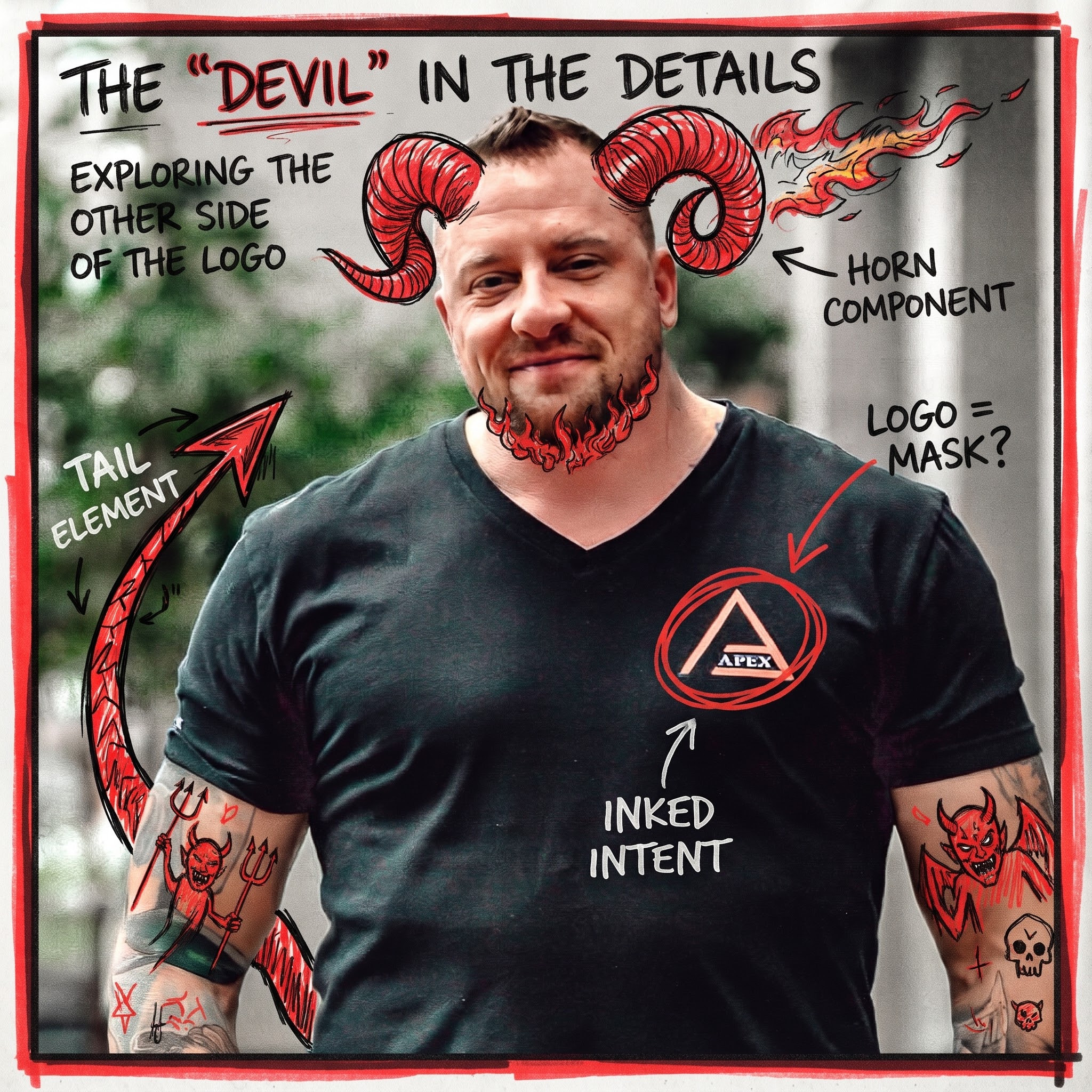
In 2016, Ryan Stewman published a piece in Entrepreneur called “How I Went From a Cellblock to a Penthouse.” He opened with his account of a cocaine arrest and a guilty plea. A decade later, the public-facing business he built includes Hardcore Closer, a sales education brand, and Apex, a paid mentoring and networking program. The prison story is part of how he explains why people should listen to him. It was never much of a secret.
The more useful question is what a customer can check before paying for coaching, buying an event ticket, or applying for business financing. The records reviewed here turn up two federal civil cases brought by Stewman or a company associated with him, neither decided on the merits. They also turn up a financing homepage that advertises no prepayment penalties while its disclosures allow for them in some cases. The second point tells a prospective borrower more about what to ask before signing than either lawsuit does.
The prison story is on the record in his own words
In his Entrepreneur essay, Stewman says he pleaded guilty after an arrest for manufacturing and delivering cocaine and received a two-year Texas prison sentence. In a separate Neon Noise interview, around 5:54 to 7:15, he describes police finding a firearm after his release and says he later served another 15 months in federal prison, getting out in 2008. He gives a similar account in a MakingBank interview.
Those accounts establish what Stewman has publicly said about himself. The plea papers, indictments and sentencing judgments were not recovered for this review. His precise conviction counts, the courts that entered the judgments and the disposition of any separate state firearms case therefore remain unverified here. His explanation of how the authorities handled the firearm case is also his account, not a court’s finding.
Stewman credits his move from mortgages into marketing and sales instruction in part to licensing trouble after his return from prison. In the Neon Noise interview, he says his Texas license was valid but he could not obtain the approval he needed under changed rules. No licensing-denial or disciplinary order was obtained for this piece. His explanation should not be turned into a finding of mortgage fraud or professional misconduct.
In a 2023 Beyond the Story interview, Stewman also recounts giving seminars in prison after inmates asked him how to clean drug proceeds. The host’s transcript records him saying he declined to handle their paperwork, and the story later turns to encouraging lawful businesses after release. The account was not independently corroborated. No money-laundering charge, judgment or transaction was verified in connection with that story, and it supplies no evidence that his current businesses launder money.
What the federal civil cases actually decided
Stewman v Bauhof
On February 2, 2022, Ryan Stewman, Amy Stewman and Closer Marketing, LLC sued W. Bradley Bauhof, associated firms and other defendants in the Eastern District of Texas. Stewman was a plaintiff. The public docket mirror identifies the original complaint and summonses. The later court order describes a dispute involving alleged misrepresentations and an escrow agent, but the full amended complaint and exhibits were not obtained. The order describes the allegations as part of resolving where the case could be heard.
On April 9, 2026, U.S. District Judge Sean D. Jordan adopted the magistrate judge’s recommendation and granted the remaining Bauhof defendants’ motion to dismiss for lack of personal jurisdiction. The opinion distinguishes Bauhof’s limited communications from the alleged misrepresentations attributed to other, previously dismissed defendants. The court denied the plaintiffs’ request for jurisdictional discovery and dismissed the amended complaint without prejudice. The ruling did not establish whether the underlying accusations were true. Read the court’s order, Document 52.
View Document 52 in the article
Open the PDF in a new page. If your browser does not display inline PDFs, open the official GovInfo copy.
Break Free Academy v Step It Up Academy
In August 2022, Break Free Academy, LLC brought a federal trade-secret case against Step It Up Academy and Tomas Keenan in the Northern District of Texas. In November the judge ordered the plaintiff to explain why it had not served the defendants. Break Free Academy then filed a notice of voluntary dismissal, and the judge dismissed the complaint without prejudice on November 23, 2022. The court did not determine whether any trade secret was taken. Stewman is not named individually in the accessible caption, and the available docket entries do not show whether the parties settled. Read the docket and the entries for Documents 3, 4 and 5.
Read the offer before you buy the story
Closer Capital’s homepage tells visitors they can find out instantly how much capital they are approved for. Its own calculator describes the number as a prequalification. The legal disclosures say an application or prequalification guarantees neither approval nor funding. They identify Closer Capital as a broker and leave final underwriting to the lender. The same homepage advertises “No prepayment penalties,” while the disclosures list possible prepayment penalties where applicable. Those statements could reflect different products, but the homepage does not make that distinction where the promise appears.
Then there is the company’s link labeled “Independent Reviews.” The destination discloses that Closer Capital pays it when readers apply through the site. The financial relationship is disclosed. It also gives the publisher an incentive to generate applications. A favorable review there is not a substitute for the lender’s written offer, fee schedule or early payoff terms.
Coaching and events present a similar question. Hardcore Closer’s general terms say digital-product purchases are final, describe a possible future-event credit for a buyer who cannot attend, and provide for binding arbitration. A separate Apex Ascend checkout page advertises a 30-day guarantee and describes conditions in its FAQ. If you buy, save the checkout terms for the specific offer rather than assuming a guarantee or a refund restriction applies across every program.
An older Apex Entourage sales page also cites a business failure rate above 97% without identifying a cohort or time frame on the page. Compare what an actual benchmark looks like: the Bureau of Labor Statistics reported that 34.7% of private-sector establishments opened in March 2013 were still operating ten years later. That measures survival for a defined cohort. It is not a direct rebuttal to an undefined claim, and a closure does not necessarily mean a financial failure. Ask the seller for the study, what it measured and what it has to do with the product you’re buying.
None of those observations establishes that a borrower was charged an undisclosed fee or that a coaching customer was denied a refund owed under their agreement. They do identify the questions worth settling before paying: who signs the agreement, what is included, what lowers or raises the total cost, and what happens if the offer does not deliver what the buyer understood it to promise. A public figure’s comeback story can be compelling. It can’t answer those questions for the buyer.
Case file index
These are the court materials located for this review, with missing filings identified by docket number where known. Public docket mirrors are not a substitute for the complete clerk’s file.
- Stewman et al v Bauhof et al, E.D. Tex., 4:22-cv-00080-SDJ-AGD: official opinion index · Doc. 52 official PDF · readable order · public docket mirror. Doc. 1 (complaint) and the summonses are indexed; the amended complaint (38), dismissal motion (43), discovery request (46), recommendation (47), objections (48) and response (49) are identified in the court’s order but their full text was not recovered. Search the PACER Case Locator for the full docket.
- Break Free Academy LLC v Step It Up Academy LLC et al, N.D. Tex., 3:22-cv-01774: docket with entries for the complaint (1), service order (3), voluntary-dismissal notice (4) and dismissal order (5). This is a docket link, not a complete set of the filings. Use PACER for the individual documents.
- Collin County cause 471-02559-2023: an examiner’s public CV identifies a matter styled Jessie Lee in MD, LLC v Catherine Alexandra Ames and Break Free Academy, LLC. This is a lead, not a verified court record. Stewman does not appear individually in the listed caption. No pleading, judgment or disposition was recovered. Search the cause number in Collin County’s court records portal.
- Criminal cases described by Stewman: no verified case numbers, plea papers or judgments recovered. The federal search point is PACER. The state search requires identifying the sentencing county and requesting its historical file if unavailable online.
One easy-to-misread record: the SEC’s Form D for Apex Investors Fund, LLC lists Stewman as an executive officer. It is an offering notice, not an enforcement case, an audit, or a ruling on the underlying investment.
Records reviewed through November 28, 2026. The review covers materials accessible for this draft, not sealed matters, private arbitration or every federal and state filing. No outreach was conducted for this draft.